
How to Train Your Puppy: 10 Proven Strategies for New Dog Owners
Bringing a new puppy into your home marks the beginning of an exciting journey, filled with joy, companionship, and a fair share of learning curves. Establishing a solid foundation during these early months is paramount, shaping your puppy's behavior and temperament for years to come.
Effective training not only fosters a harmonious relationship between you and your new family member but also ensures their safety and well-being. This guide offers ten proven strategies, drawing on established domain knowledge and widely-reported consensus from veterinary professionals and certified trainers, designed to equip new dog owners with the tools for success.
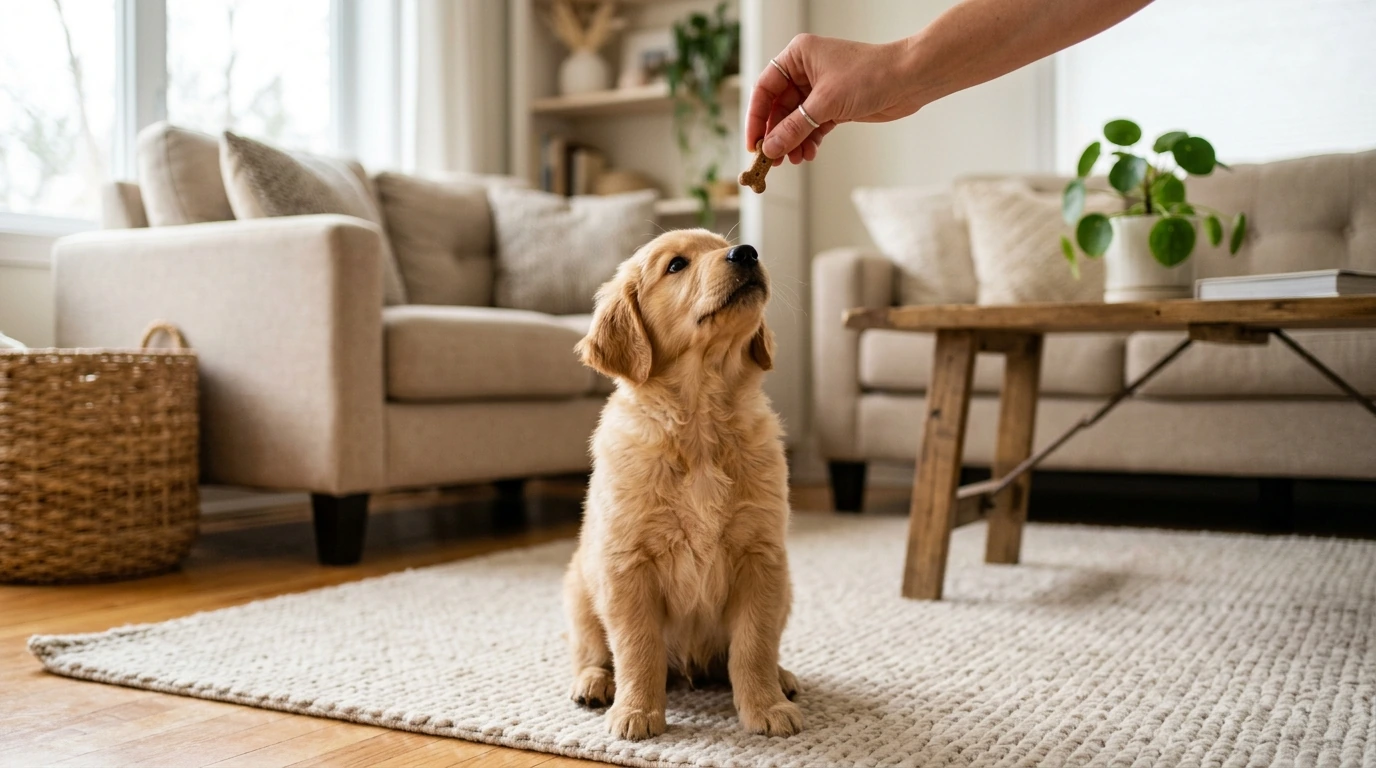
Key Takeaways for Puppy Training Success
- Consistency is Key: Apply training methods uniformly across all family members and environments.
- Positive Reinforcement: Utilize treats, praise, and play to reward desired behaviors.
- Early Socialization: Expose your puppy to varied sights, sounds, people, and vaccinated dogs during their critical developmental window.
- Patience and Understanding: Training takes time; celebrate small victories and approach challenges with a calm, understanding demeanor.
Preparing for Your Puppy's Arrival: Initial Steps
Before your puppy even sets paw in your home, having essential supplies and a basic understanding of their needs can significantly ease the transition. This proactive approach helps minimize stress for both you and your new companion.
Essential Supplies and Setup Checklist
Ensure you have the following ready:
- Crate: Appropriately sized for your puppy, allowing them to stand, turn around, and lie down comfortably.
- Food and Water Bowls: Stainless steel or ceramic are often recommended for hygiene.
- High-Quality Puppy Food: Consult with your breeder or veterinarian for a suitable brand and feeding schedule.
- Collar and Leash: A lightweight collar and a 4-6 foot leash are ideal for initial training.
- Safe Chew Toys: To redirect nipping and satisfy natural chewing instincts.
- Training Pads: Useful for house training, especially in apartments or during inclement weather.
- Cleaning Supplies: Enzyme cleaners are effective for puppy accidents.
- Designated Potty Area: Identify a specific spot outdoors for your puppy to relieve themselves.
Understanding Puppy Developmental Phases
Puppies go through several critical developmental stages, each influencing their learning capacity and social behavior. The socialization window, typically between 3 to 16 weeks of age, is particularly important for exposing your puppy to new experiences in a positive manner. Understanding these phases helps tailor your training approach to their age-appropriate capabilities.
Guiding Your Puppy: A Step-by-Step Behavioral Blueprint
Successful puppy training relies on clear communication, positive reinforcement, and a structured approach. Here are ten proven strategies to guide your puppy toward becoming a well-adjusted adult dog.
Establishing a Consistent Routine
Puppies thrive on predictability. Implement a consistent daily schedule for feeding, potty breaks, playtime, and sleep. This structure helps your puppy understand expectations and accelerates house training. For example, feeding at the same times each day will lead to predictable potty times approximately 15-30 minutes after eating.
Effective House Training Protocols
The cornerstone of a well-behaved puppy is successful house training. Take your puppy out frequently—every 1-2 hours for very young puppies, immediately after waking up, after eating, and before bedtime. Reward them generously with praise and a small treat the moment they eliminate outside. Avoid punishment for accidents; instead, interrupt the act calmly and immediately take them outside.
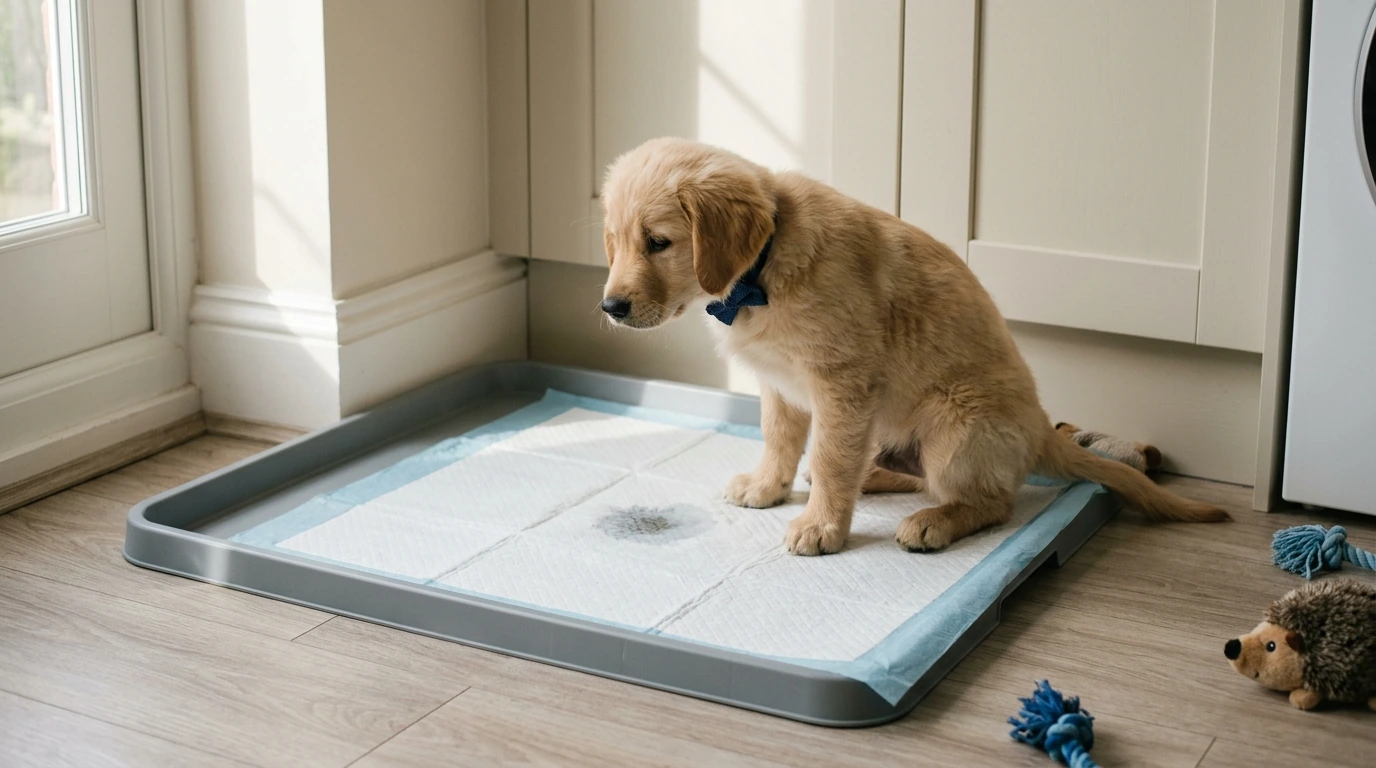
A puppy using a training pad for housebreaking. The Power of Positive Reinforcement
Positive reinforcement is the most effective training method. Reward desired behaviors (e.g., sitting, coming when called, pottying outside) with high-value treats, verbal praise, or a favorite toy. This creates a positive association with learning and encourages your puppy to repeat those actions. Avoid using fear or intimidation, as this can damage trust and hinder progress.
Early Socialization for Confidence
Between 3 and 16 weeks, expose your puppy to a wide variety of positive experiences. This includes meeting different people (men, women, children), experiencing various sounds (vacuum cleaners, traffic), encountering different surfaces (grass, pavement, carpet), and safely interacting with other vaccinated, friendly dogs. Proper socialization helps prevent fear-based aggression or anxiety later in life.
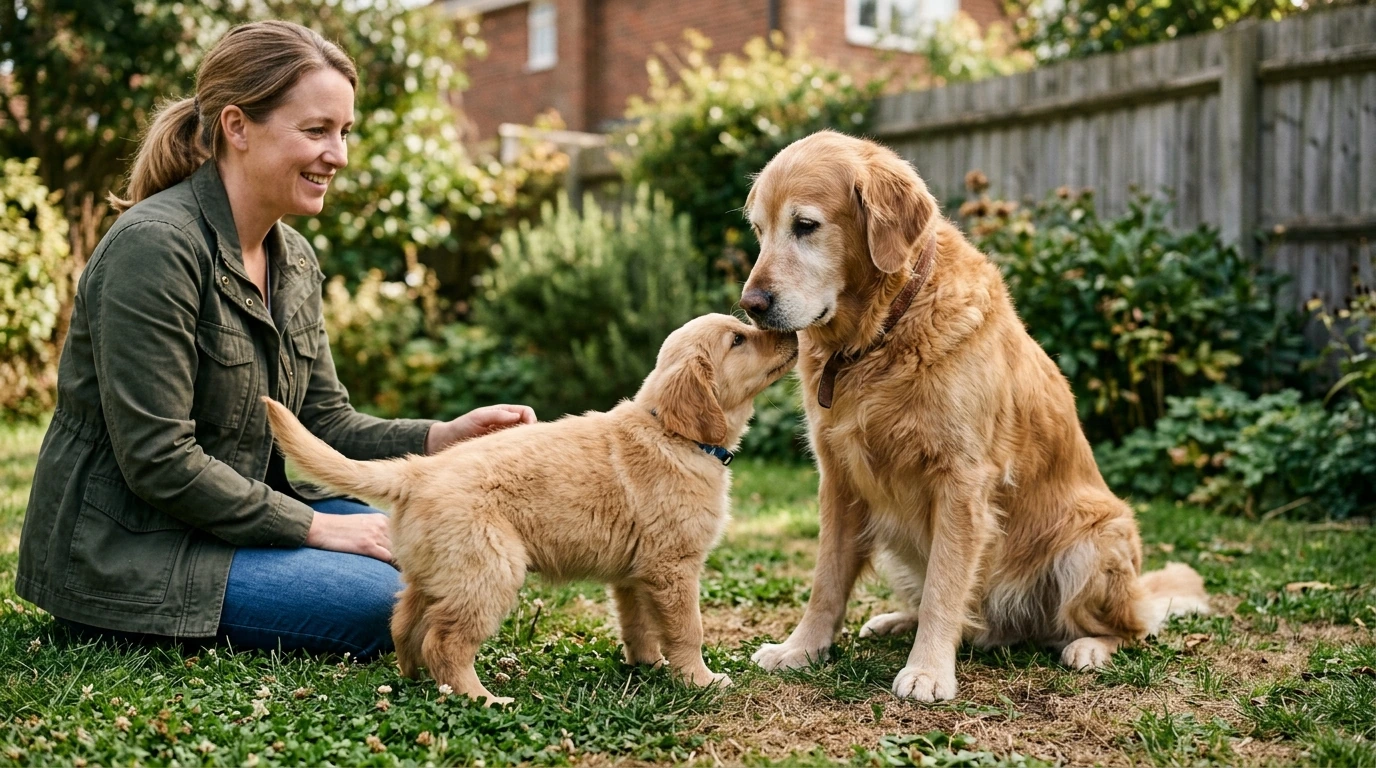
A puppy engaging in supervised socialization with an older dog. Introducing Basic Commands (Sit, Stay, Come)
Start with simple commands like 'sit' and 'come'. Use short, clear words and pair them with hand signals. For 'sit', hold a treat above your puppy's head, moving it back towards their tail until their rear touches the ground, then say 'sit' and reward. Practice in short, frequent sessions (5-10 minutes) to maintain their attention.
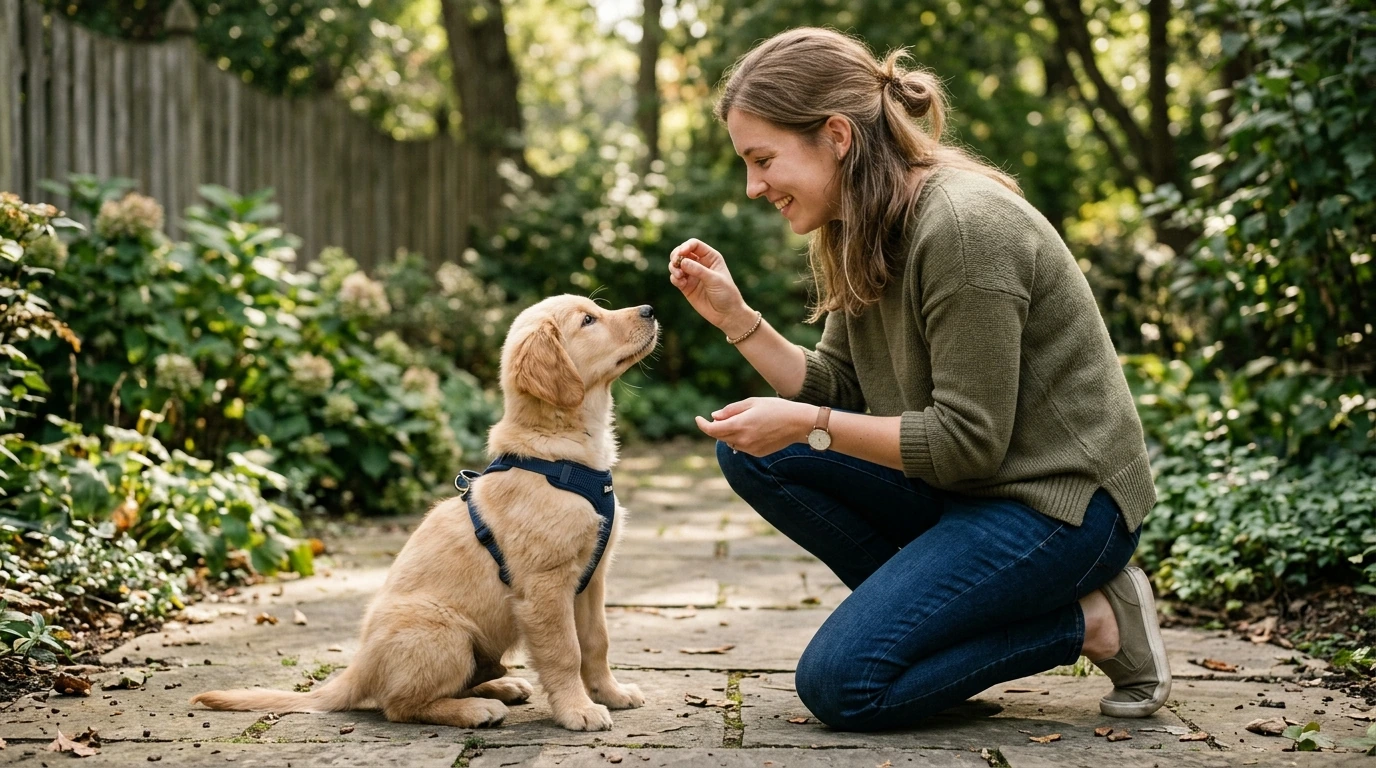
A puppy performing a "sit" command during obedience training. Crate Training for Security & Structure
A crate can become a safe, comfortable den for your puppy. Introduce the crate positively with treats and toys, never using it for punishment. Crate training aids in house training by leveraging a dog's natural instinct not to soil their sleeping area. It also provides a secure space for them when unsupervised.
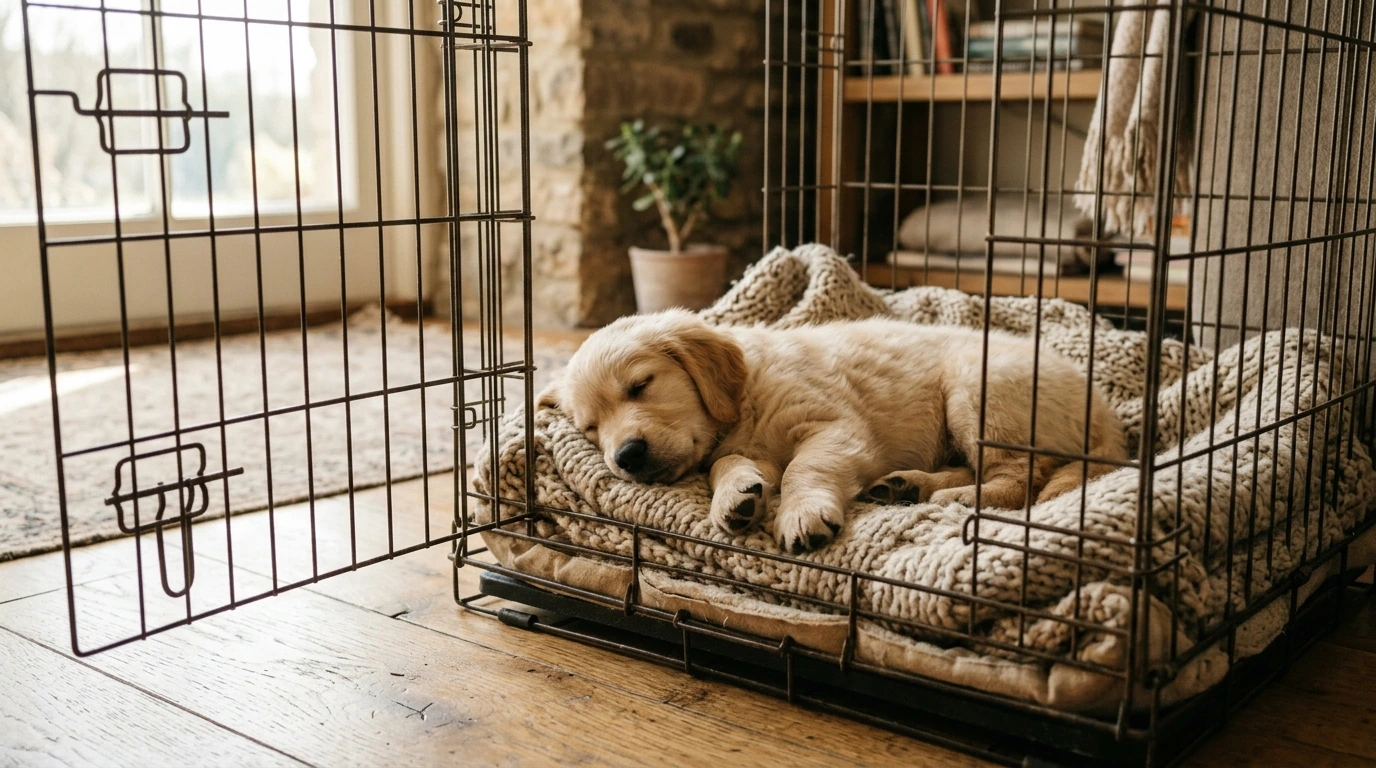
A puppy relaxing comfortably inside a training crate. Managing Nipping and Biting
Puppies explore the world with their mouths. When your puppy nips too hard, yelp loudly (like another puppy would) and immediately withdraw attention or leave the room for 30-60 seconds. This teaches them bite inhibition. Always redirect their chewing to appropriate toys.
Leash Training Fundamentals
Introduce the collar and leash gradually. Allow your puppy to wear the collar for short periods, then attach the leash and let them drag it around indoors under supervision. Begin short walks in a quiet area, rewarding loose-leash walking. Avoid pulling or dragging your puppy.
Addressing Separation Anxiety Proactively
Preventing separation anxiety starts early. Practice leaving your puppy alone for short, increasing durations, starting with just a few minutes. Ensure they have access to safe toys or a puzzle feeder while you're away. Avoid making departures or arrivals a big emotional event.
The Importance of Continued Learning
Training is an ongoing process. Once your puppy masters basic commands, consider enrolling in puppy classes or advanced obedience courses. Continued mental stimulation and learning reinforce good behavior and strengthen your bond.
Avoiding Common Puppy Training Pitfalls
Even with the best intentions, new owners can encounter challenges. Being aware of common mistakes can help you navigate them more effectively.
- Inconsistency: Sending mixed signals or not adhering to the routine can confuse your puppy and slow progress. Ensure everyone in the household follows the same rules and commands.
- Punishment-Based Training: Yelling, hitting, or using harsh methods can instill fear, damage trust, and may lead to behavioral problems like aggression or anxiety. Focus on positive reinforcement.
- Lack of Socialization: Insufficient exposure during the critical socialization window can result in a fearful or reactive adult dog. Make a conscious effort to provide positive, varied experiences.
- Expecting Too Much, Too Soon: Puppies have short attention spans and are still developing. Keep training sessions brief, fun, and age-appropriate. Patience is crucial.
- Not Providing Enough Mental and Physical Stimulation: An under-stimulated puppy is more likely to engage in destructive behaviors. Ensure your puppy receives adequate exercise, playtime, and puzzle toys.
Confirming Your Puppy's Progress and Understanding
Regularly assessing your puppy's understanding and behavior is vital for ensuring training is effective and identifying areas that may need more attention. This isn't a pass/fail test, but rather a check-in on their development.
- Reliable Potty Habits: Can your puppy go for 2-3 hours (age-dependent) without an accident indoors, consistently eliminating outside?
- Responding to Basic Cues: Does your puppy reliably respond to 'sit', 'come', and their name in various environments with minimal distractions?
- Comfort with Crate: Does your puppy enter their crate willingly and settle down calmly for appropriate durations?
- Appropriate Play: Is your puppy engaging in play without excessive nipping or biting, and easily redirected to toys?
- Positive Social Interactions: Does your puppy exhibit curiosity and calm behavior when encountering new people, sounds, or other friendly dogs?
- Loose-Leash Walking: Can your puppy walk on a leash without constant pulling for short distances?
Understanding Nocturnal Feline Vocalizations: Unpacking the Causes and Effective Solutions for Nighttime Cat Meowing →
Frequently Asked Questions About Puppy Training
How long does it typically take to house train a puppy?
House training duration varies significantly based on the individual puppy, consistency of training, and owner dedication. Some puppies may grasp the concept within a few weeks, while others might take several months. A general timeframe often reported is 4-6 months, but some can take up to a year for complete reliability.
What should I do if my puppy keeps biting?
For persistent nipping, continue with bite inhibition training: yelp, withdraw attention, and offer an appropriate chew toy. Ensure your puppy is getting enough mental and physical exercise, as excess energy can contribute to nipping. If the issue persists or escalates, consulting a professional dog trainer is recommended.
Can I start training my puppy too early?
No, you cannot start training too early. Basic socialization and positive reinforcement can begin as soon as your puppy comes home, typically around 8 weeks of age. Early positive experiences and gentle introduction to commands lay a strong foundation for future learning.
Is it necessary to use treats for training?
While not strictly necessary for all dogs in all situations, high-value treats are highly effective, especially in the initial stages of training, for motivating puppies and creating strong positive associations with desired behaviors. As your puppy progresses, you can gradually transition to verbal praise, toys, or real-life rewards (like access to a favorite activity) as motivators.



Post a Comment for "How to Train Your Puppy: 10 Proven Strategies for New Dog Owners"