
Crafting a Regal Identity: A Blueprint for Show Dog Names and Essential Healthcare Planning
Securing a distinguished name for a show dog and establishing robust healthcare coverage are two foundational pillars for any aspiring competitor. These decisions, made early in a dog's life, significantly influence their journey in the show ring and their overall well-being. This guide offers a comprehensive blueprint for navigating both processes effectively in 2026, ensuring your canine companion is set up for success and longevity.
Laying the Groundwork: Naming and Health Essentials
Before any formal steps are taken, a clear understanding of the requirements for both show dog naming and pet healthcare coverage is paramount. The right preparation can streamline complex processes and prevent future complications, setting your canine partner on a path to thrive.
Prerequisites for a Distinguished Name:
- Breed Registry Knowledge: Familiarity with the specific naming rules and restrictions of your chosen breed's registry (e.g., AKC, Kennel Club).
- Lineage Awareness: Understanding your dog's pedigree and the naming conventions often used within their bloodline.
- Show Ring Etiquette: An appreciation for names that are clear, easy to pronounce, and project a sense of dignity.
Essentials for Comprehensive Healthcare Coverage:
- Veterinary Relationship: An established relationship with a trusted veterinarian who can provide a baseline health assessment.
- Budgetary Insight: A realistic understanding of your financial capacity for monthly premiums and potential out-of-pocket costs.
- Breed-Specific Health Risks: Knowledge of common hereditary conditions or predispositions relevant to your dog's breed.
Crafting a Noble Moniker for the Ring
Selecting a name for a show dog extends beyond personal preference; it involves strategy, respect for lineage, and adherence to registry guidelines. A well-chosen name can enhance a dog's presence and reflect its inherent qualities.
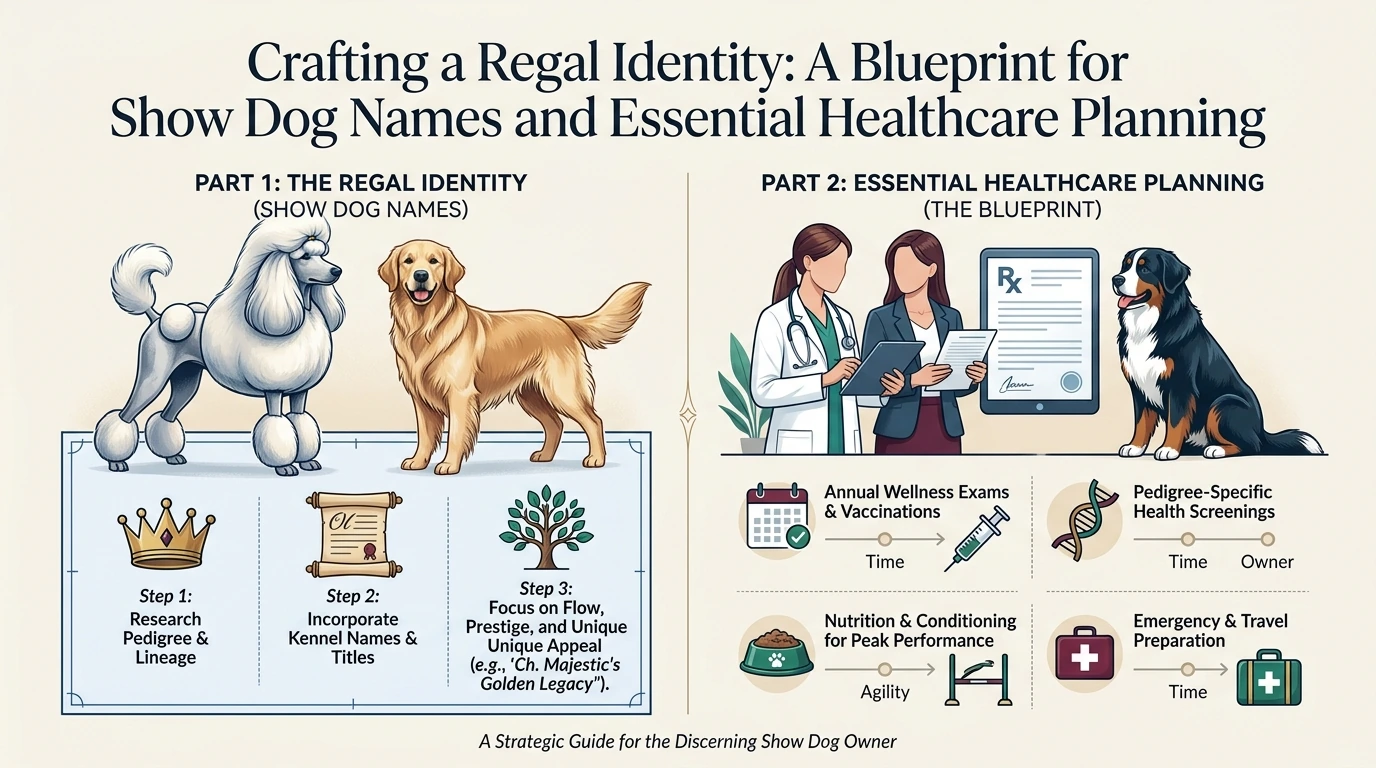
- Research Lineage and Themes: Explore the names of your dog's ancestors. Many breeders follow specific letter themes for litters or incorporate parts of the sire's or dam's names. This provides a strong foundation for a unique yet connected identity.
- Brainstorm Royal and Elegant Concepts: Consider historical figures, mythological deities, gemstones, noble titles, or geographic locations known for grandeur. Think about names that evoke strength, beauty, intelligence, or grace, aligning with your dog's breed standard.
- Check Registry Rules: Consult your breed's primary registry for specific guidelines. This includes character limits, restrictions on profanity, and rules regarding kennel names. Some registries require kennel names to be included, while others allow more flexibility.
- Ensure Uniqueness and Pronunciation: Verify that your chosen name isn't overly common or too similar to other registered dogs, especially within your breed. Practice saying the name aloud to ensure it's easy for judges and handlers to pronounce clearly and consistently in a bustling show environment.
- Seek Feedback: Share your top name choices with your breeder, handler, or experienced show dog owners. Their insights can be invaluable, offering perspectives on how a name might be perceived in the ring.

Navigating Comprehensive Canine Health Coverage
Pet insurance has become an invaluable tool for managing the unpredictable costs of veterinary care. For show dogs, whose health is paramount to their performance and longevity, selecting the right coverage is a critical decision.
- Assess Your Dog's Specific Needs: Consider your dog's breed, age, and any existing health conditions. Younger dogs often qualify for broader coverage at lower premiums. Breeds prone to certain genetic issues may benefit from policies with higher caps for specific treatments.
- Research Reputable Providers: Investigate various pet insurance companies. Look for providers with strong financial ratings, positive customer reviews, and clear policy documentation. Consider their history of claims processing and customer service.
- Compare Policy Types and Coverage: Most providers offer accident-only, accident & illness, and wellness plans. Accident & illness policies are generally recommended for comprehensive coverage, encompassing a wide range of medical conditions, surgeries, and diagnostic tests. Wellness plans, if desired, can be added for routine care like vaccinations and annual check-ups.
- Understand Deductibles, Reimbursement Rates, and Annual Limits: These three factors directly impact your out-of-pocket expenses. A higher deductible typically means lower premiums. Reimbursement rates (e.g., 70%, 80%, 90%) determine the percentage of covered costs the insurer pays. Annual limits cap the total amount the policy will pay out in a year.
- Review Exclusions and Waiting Periods: Carefully read the policy's exclusions, which detail what is not covered (e.g., pre-existing conditions, cosmetic procedures). Be aware of waiting periods—the time frame after policy activation before certain conditions are covered. Some policies have different waiting periods for accidents versus illnesses.
- Enroll and Understand the Claims Process: Once you've selected a policy, complete the enrollment process. Familiarize yourself with how to submit claims, what documentation is required, and the typical timeline for reimbursement.
Avoiding Common Missteps in Naming and Insurance
Even with careful planning, certain oversights can lead to frustration or financial strain. Being aware of these common pitfalls allows for proactive avoidance.
- Inadequate Name Research: Choosing a name that is already registered or too close to another, leading to rejection by the kennel club. Avoid overly complex or trendy names that may not age well or fit the serious nature of the show ring.
- Underestimating Healthcare Costs: Opting for an insurance plan with very low premiums but high deductibles or low annual limits, leaving you significantly exposed during a major health event.
- Ignoring Pre-Existing Conditions: Assuming all health issues will be covered. Most pet insurance policies do not cover conditions diagnosed before the policy's effective date or during a waiting period.
- Neglecting Breed-Specific Risks: Not considering your dog's breed-specific health predispositions when selecting coverage. For instance, a breed prone to hip dysplasia might require a policy with robust orthopedic coverage.
- Delaying Enrollment: Waiting until a health issue arises to purchase insurance. Policies have waiting periods, and any condition diagnosed during this time will likely be considered pre-existing.
Ensuring Readiness: Post-Decision Checkpoints
After a name is chosen and insurance is secured, a final verification ensures everything is in order and ready for the show ring and any health contingencies.
For the Chosen Name:
- Registry Confirmation: Verify that the chosen name has been officially approved and registered with the relevant kennel club.
- Handler Familiarity: Ensure your dog's handler is comfortable with the name and can pronounce it clearly and confidently.
- Dog's Response: Observe if your dog responds positively to their new name during training and daily interactions.
For Healthcare Coverage:
- Policy Activation Confirmation: Confirm receipt of your policy documents and verify the effective date of coverage.
- Understanding Claims Process: Have a clear understanding of how to file a claim, including required forms and submission methods.
- Regular Veterinary Consultations: Maintain regular check-ups with your veterinarian, ensuring all recommended preventative care is up-to-date and covered where applicable.
- Emergency Contact Information: Keep your pet insurance provider's contact information readily accessible for urgent situations.
Understanding Nocturnal Feline Vocalizations: Unpacking the Causes and Effective Solutions for Nighttime Cat Meowing →
Frequently Asked Questions
What makes a name "royal" for a show dog?
A royal name typically evokes nobility, elegance, and distinction. This often involves drawing inspiration from historical figures, mythology, classic literature, or terms associated with grandeur and prestige, while also fitting the dog's breed and personality.
Can I change my show dog's registered name later?
While possible with some registries, changing a registered name can be a complex process, often involving fees and specific forms. It's generally best to choose the permanent name carefully from the outset.
Is pet insurance truly necessary for a healthy show dog?
Even healthy show dogs can experience unexpected accidents or illnesses. Pet insurance provides a financial safety net, allowing owners to make medical decisions based on what's best for their dog's health rather than solely on cost.
Do pet insurance policies cover routine veterinary visits?
Many standard accident & illness policies do not cover routine care. However, some providers offer optional "wellness" add-ons or separate wellness plans that specifically cover vaccinations, annual exams, and other preventative services for an additional premium.



Post a Comment for "Crafting a Regal Identity: A Blueprint for Show Dog Names and Essential Healthcare Planning"