
Distinguishing a dog's typical habits from critical illness indicators requires careful observation
It can be challenging for dog owners to discern whether a minor behavioral quirk is simply part of their pet's personality or an early indicator of a health issue. As a veterinarian and animal behaviorist, I frequently encounter questions about distinguishing between a dog's normal antics and symptoms that warrant concern. Understanding your dog's typical patterns is the first, and most crucial, step in identifying when something is amiss.

Establishing Your Dog's Behavioral Baseline
Before you can identify deviations, you must have a clear understanding of what constitutes “normal” for your specific dog. Every canine has a unique personality, energy level, and set of habits. Observing these consistently provides the reference point needed for accurate assessment.
Required “Tools” for Baseline Assessment:
- Consistent Daily Observation: Dedicate time each day to simply watch your dog without distraction.
- Mental or Written Log: Note typical eating habits, water intake, elimination schedule, energy levels, and social interactions.
- Familiarity with Breed-Specific Traits: Some breeds are naturally more energetic, vocal, or prone to certain behaviors.
Decoding Behavioral Shifts: What Signals Concern?
Subtle changes in a dog's routine or disposition are often the first signs of an underlying problem, whether medical or behavioral. These shifts require careful attention.
- Assess Changes in Activity Level: Is your dog suddenly more lethargic, sleeping more than usual, or reluctant to engage in activities it typically enjoys? Conversely, an unexplained increase in restlessness, pacing, or difficulty settling down could also be a sign.
- Monitor Appetite and Thirst: A sudden disinterest in food, refusal to eat, or a significant decrease in water intake are immediate red flags. Conversely, an insatiable appetite or excessive thirst can indicate metabolic issues like diabetes or kidney disease.
- Observe Social Interaction: Has your dog become unusually withdrawn, hiding, or avoiding family members? Or has it shown uncharacteristic aggression, irritability, or fear towards familiar people or pets?
- Note Vocalization Changes: An increase in whining, barking, or howling without an obvious trigger, or a sudden silence from a typically vocal dog, can be significant.
- Evaluate Elimination Habits: Any changes in frequency, consistency (diarrhea, constipation), color, or presence of blood in urine or stool demand immediate attention. Accidents indoors from a previously house-trained dog are also a concern.

Physical Indicators That Demand Attention
Beyond behavior, physical symptoms offer direct evidence of health issues. A regular, gentle physical check can reveal problems before they become severe.
- Examine Coat and Skin: Look for dullness in the coat, excessive shedding, dry or flaky skin, redness, rashes, lumps, or persistent scratching.
- Check Eyes and Ears: Eyes should be clear and bright, with no excessive discharge, redness, or cloudiness. Ears should be clean, free of odor, redness, or dark discharge.
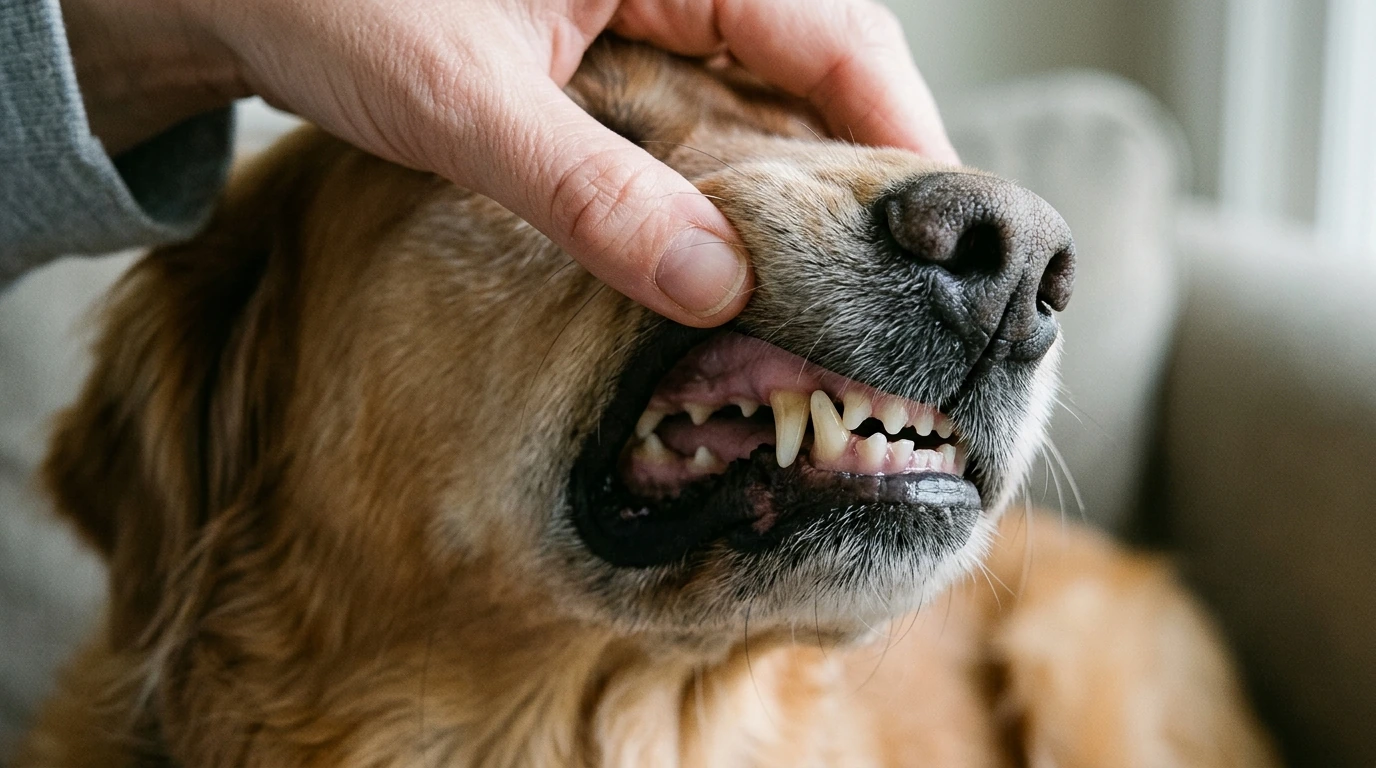
- Inspect Nose and Gums: A dog's nose should be moist but not runny. Gums should be pink and moist; pale, blue, or very red gums are serious concerns. Capillary refill time (pressing on gums, releasing, and seeing color return within 1-2 seconds) is a quick check.
- Assess Gait and Movement: Watch for limping, stiffness, difficulty getting up or lying down, or a reluctance to climb stairs.
- Palpate Body for Lumps or Tenderness: Gently run your hands over your dog's body to feel for any new lumps, bumps, or areas where they react with pain or tenderness.
PRO TIP: Documenting Changes
Keep a simple journal or use a note-taking app to record any changes you observe. Note the date, time, specific behavior or physical symptom, and its duration. This detailed information is invaluable for your veterinarian in diagnosing potential issues quickly and accurately.
Common Misinterpretations and Critical Oversights
Even with good intentions, owners can sometimes misinterpret signs or delay seeking help. Avoiding these pitfalls is crucial for your dog's well-being.
- Dismissing Subtle Changes: A slight decrease in energy or a minor change in appetite might seem insignificant but can be an early warning of serious conditions.
- Self-Diagnosis: Relying solely on internet searches or anecdotal advice can lead to incorrect conclusions and delay appropriate veterinary care.
- Attributing Symptoms to Aging: While older dogs do slow down, many age-related changes can be managed or treated. Do not assume all new symptoms are “just old age.”
- Ignoring “Intermittent” Symptoms: If a symptom appears and then disappears, it does not mean the problem is gone. Intermittent lameness or vomiting still warrants investigation.
When to Contact Your Veterinarian
After observing and documenting any changes, the next step is deciding when to seek professional help. It is always better to err on the side of caution.
Post-Observation Verification Checklist:
- Is the symptom persistent? If a change lasts for more than 24 hours.
- Is the symptom severe? Such as profuse vomiting or diarrhea, severe lameness, or difficulty breathing.
- Are multiple symptoms present? A combination of lethargy, loss of appetite, and vomiting is more concerning than a single, isolated symptom.
- Is your dog in obvious pain or distress? Whining, trembling, panting excessively, or guarding a body part.
- Has your dog's personality significantly altered? Uncharacteristic aggression, extreme fear, or sudden withdrawal.
- Have you noticed any changes in vital signs? Unusually high or low body temperature, rapid or very slow heart rate, or laboured breathing.
If you answer yes to any of these questions, contacting your veterinarian promptly is the most responsible course of action. Early detection and intervention can significantly improve outcomes for many canine health conditions.



Post a Comment for "Distinguishing a dog's typical habits from critical illness indicators requires careful observation"